True-scale A vs. B

Mosasaurus vs. Megalodon: which was bigger?

Megalodon is larger in the conservative ScaleCheck comparison: 18 m versus 13 m, and about five times the displayed mass.

Mosasaurus13 m10 t
VS
Megalodon18 m50 t
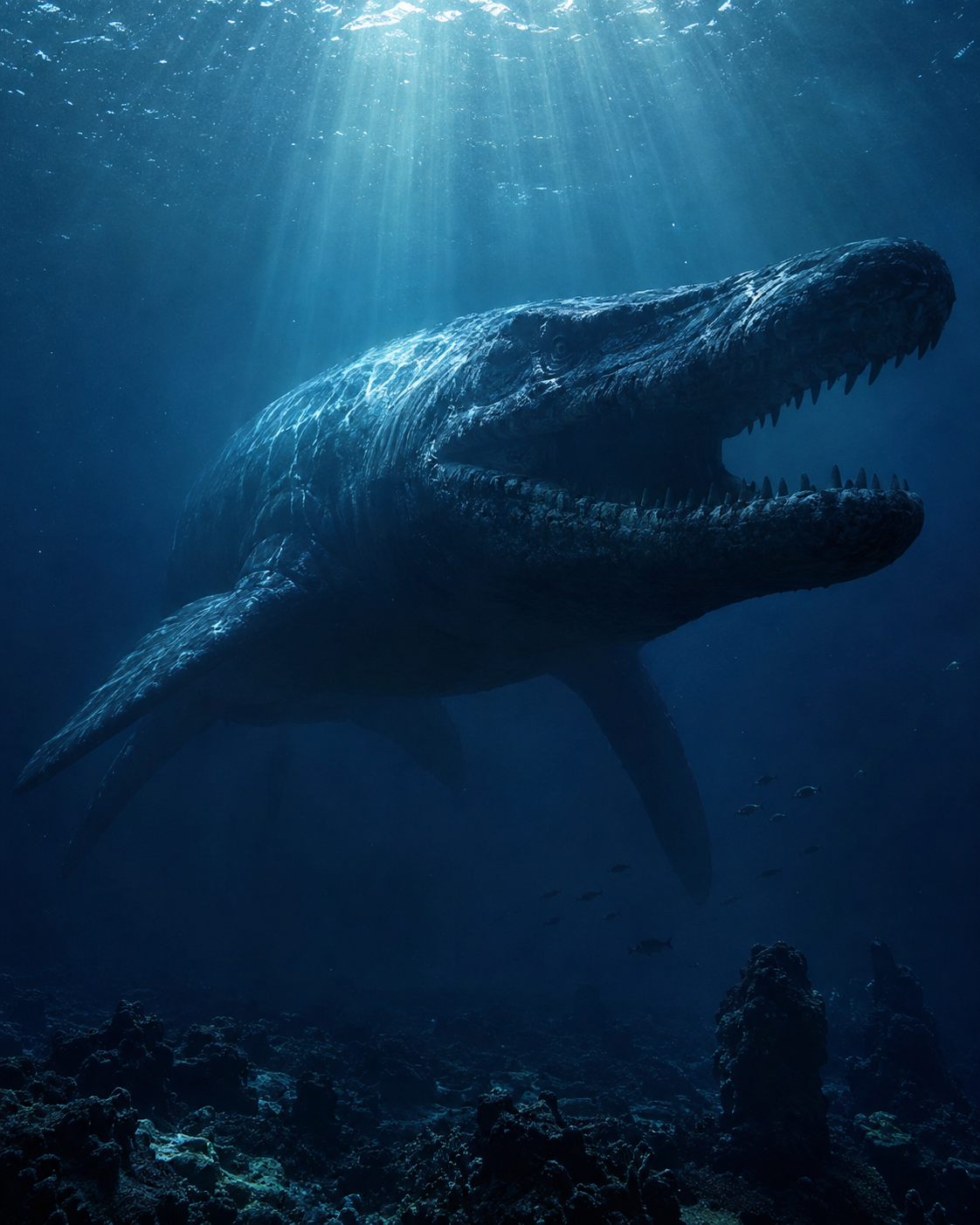
Mosasaurus swimming in a prehistoric sea for comparison with Megalodon
0 mRepresentative body length18 m

All bars share one linear metre scale. Human height and animal body length use different orientations, noted on each detail page.

Interactive true-scale view

Mosasaurus and Megalodon on one ground plane

Megalodon is 5 m longer in the conservative display. A 1.7 m human is included as a constant visual reference when it is not already one of the subjects.

Mosasaurus13 mDetailed 3D model
Megalodon18 mDetailed 3D model
Human1.7 mDetailed 3D model

Quick answer

The measurable difference

Megalodon is larger in the conservative ScaleCheck comparison: 18 m versus 13 m, and about five times the displayed mass.

Why this matchup matters

Different bodies, not just different numbers

Both are portrayed as ultimate sea monsters, but one was a shark and the other a marine lizard with very different bodies and fossil evidence.

Human scale

How the gap feels

The five-metre gap equals almost three standing adults. Even the smaller Mosasaurus still spans more than seven reference-human heights.

Evidence boundary

What the comparison cannot prove

They were separated by roughly 43 million years. Size estimates for both rely on incomplete skeletons, so this is a comparison of representative reconstructions, not two measured specimens.

Side-by-side data

Actual display values

SubjectLengthHeight / depthMassEvidence context
Mosasaurusabout 13 m in the conservative displayroughly 2.8 m through the bodyabout 10 tonnesSkulls are more common than complete skeletons, so total length depends on the head-to-body ratio used. Published estimates range from roughly 11-12 m to older upper figures near 18 m.
Megalodon18 m conservative display estimateroughly 4.5 m through the bodyabout 50 tonnes in the ScaleCheck reconstructionShark skeletons are mostly cartilage, so complete bodies do not fossilize. Researchers scale from teeth, vertebrae and living analogues, producing a broad range of estimates.

Evidence

Sources and measurement notes

  1. Natural History Museum - What is a mosasaur?
  2. Smithsonian Ocean - Megalodon
  3. Natural History Museum - The truth about the largest shark