True-scale A vs. B

Megalodon vs. Blue Whale: which was bigger?

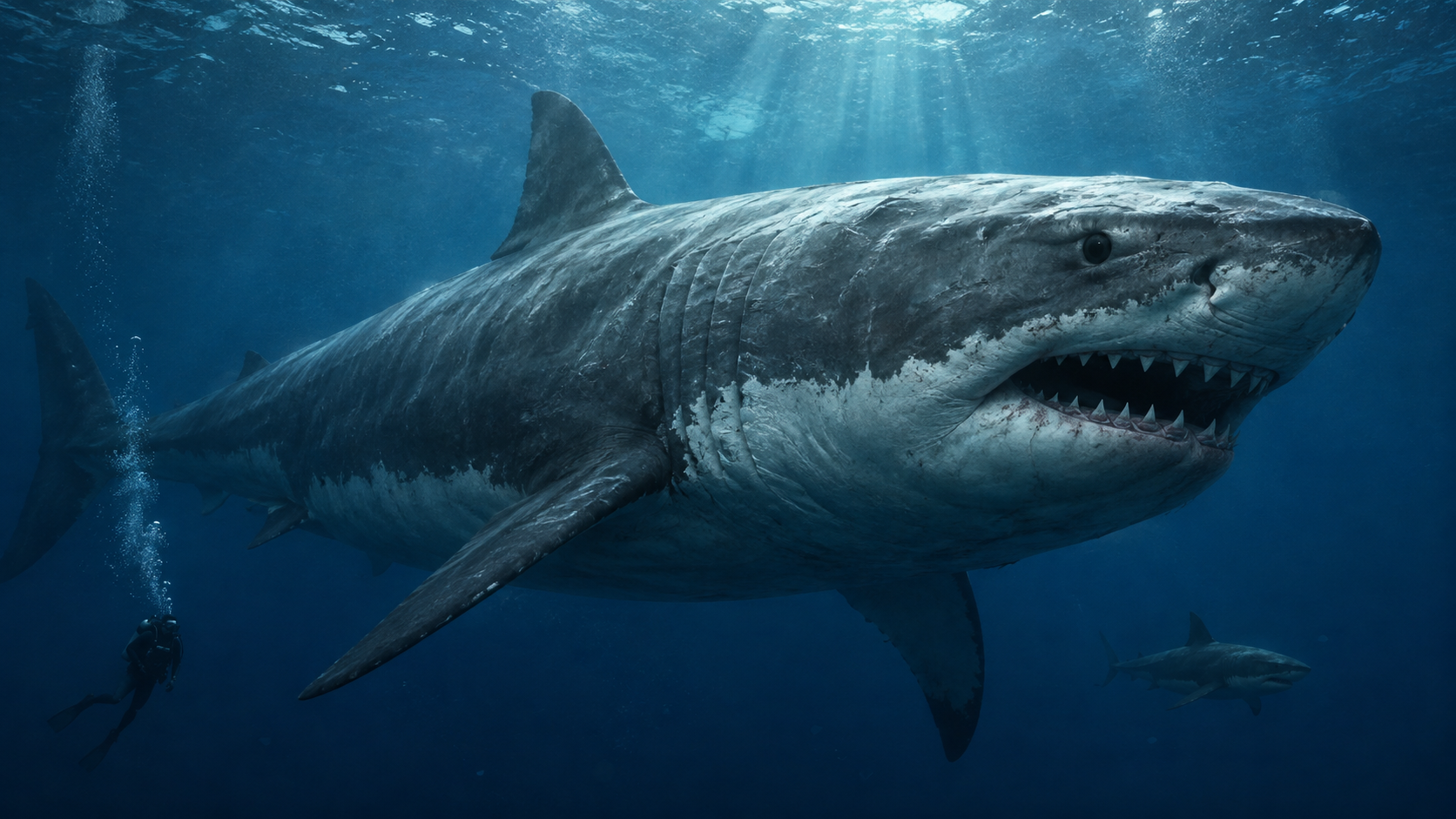
The blue whale is decisively larger in this comparison: 33 m and about 150 tonnes versus an 18 m, 50-tonne Megalodon reconstruction.

Megalodon18 m50 t
VS
Blue Whale33 m150 t
Megalodon reconstructed in open water for comparison with a blue whale
0 mRepresentative body length33 m

All bars share one linear metre scale. Human height and animal body length use different orientations, noted on each detail page.

Interactive true-scale view

Megalodon and Blue Whale on one ground plane

Blue Whale is 15 m longer and about 100 tonnes heavier. A 1.7 m human is included as a constant visual reference when it is not already one of the subjects.

Megalodon18 mDetailed 3D model
Blue Whale33 mDetailed 3D model
Human1.7 mDetailed 3D model

Quick answer

The measurable difference

The blue whale is decisively larger in this comparison: 33 m and about 150 tonnes versus an 18 m, 50-tonne Megalodon reconstruction.

Why this matchup matters

Different bodies, not just different numbers

One is the largest animal measured from living and historical records; the other is the most famous giant shark reconstructed from an incomplete fossil record.

Human scale

How the gap feels

The 15 m gap is nearly nine reference-human heights. Megalodon remains immense, but the whale extends almost another full Megalodon body length beyond its tail.

Evidence boundary

What the comparison cannot prove

Megalodon's length is inferred from teeth and vertebrae, while the 33 m whale is an exceptional historical maximum rather than a typical modern adult.

Side-by-side data

Actual display values

SubjectLengthHeight / depthMassEvidence context
Megalodon18 m conservative display estimateroughly 4.5 m through the bodyabout 50 tonnes in the ScaleCheck reconstructionShark skeletons are mostly cartilage, so complete bodies do not fossilize. Researchers scale from teeth, vertebrae and living analogues, producing a broad range of estimates.
Blue Whaleup to about 33 m in historical recordsbody depth around 5 m in the 3D reconstructionabout 150 tonnes for a very large whaleLiving whales can be measured directly, but maximum-length records include historical whaling data of uneven quality. ScaleCheck uses 33 m as an exceptional upper comparison, not a typical adult.

Evidence

Sources and measurement notes

  1. Smithsonian Ocean - Megalodon
  2. Natural History Museum - The truth about the largest shark
  3. NOAA Fisheries - Blue Whale
  4. Natural History Museum - Blue whale: a record breaker