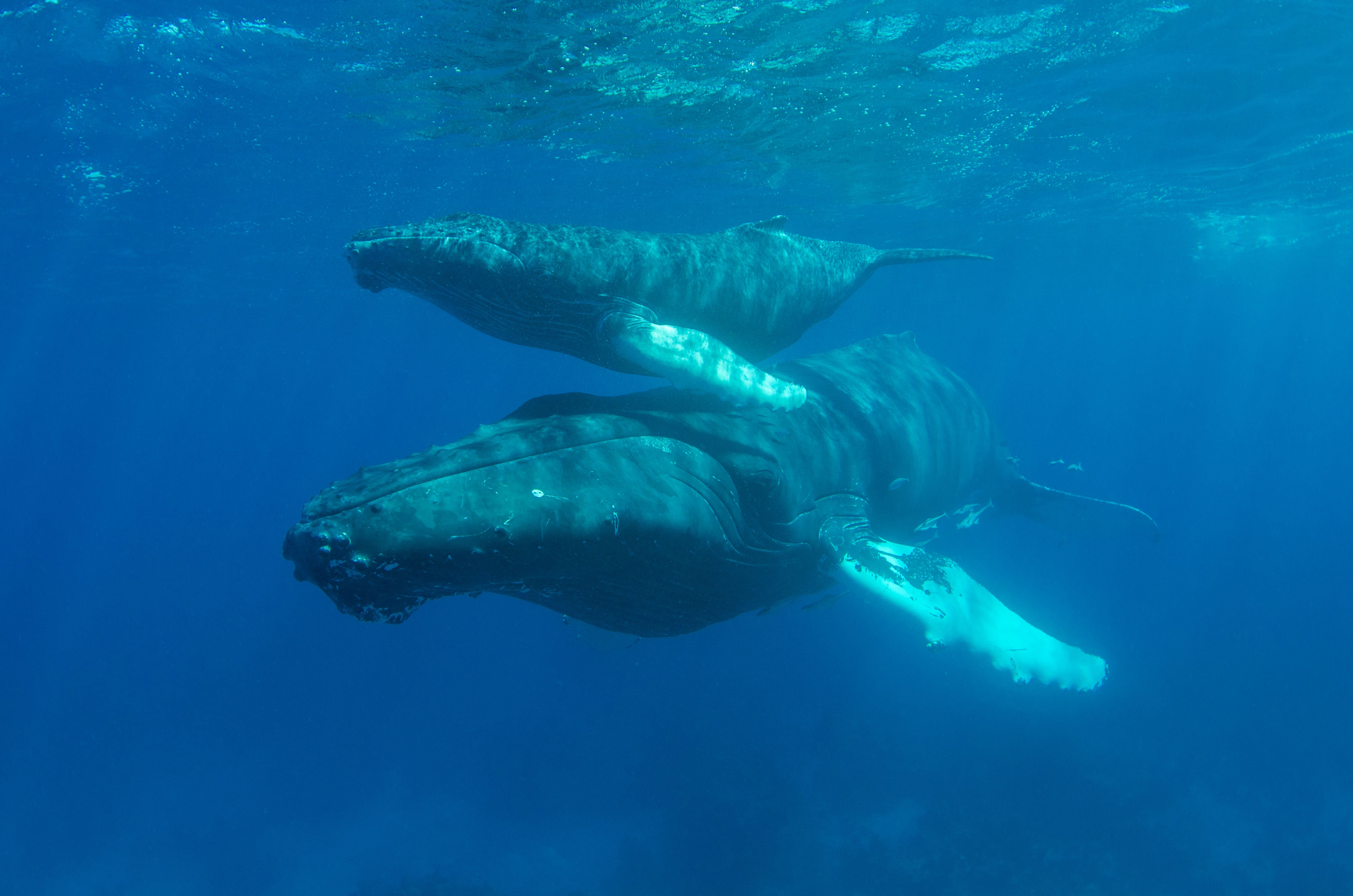
The blue whale is the largest animal known in Earth's history. Exceptional historical records approach 33 m, while most modern measurements are shorter.
All bars share one linear metre scale. Human height and animal body length use different orientations, noted on each detail page.
Interactive true-scale view
Blue Whale beside a 1.7 m human
The shared ground plane keeps 33 m and the human reference on one metre scale. Detailed models load progressively; labeled wireframes preserve scale where a model is pending.
Preparing the true-scale scene...
Drag to orbit · Scroll to zoom
Blue Whale33 mDetailed 3D model
Human1.7 mDetailed 3D model
Full 3D exhibit Continue into the ranked gallery to inspect the model, camera angles and surrounding giants.
A 33 m whale spans roughly 19.4 reference-human heights. At 150 tonnes, it weighs as much as more than two thousand 70 kg people.
More than one number
Length, height and body mass
Argentinosaurus can edge past the whale in nose-to-tail length in some reconstructions, but the whale's dense, water-supported body is more than twice as massive.
Display length
33 m
Display height
5 m
Display mass
150 t
Evidence boundary
How certain is this size?
Living whales can be measured directly, but maximum-length records include historical whaling data of uneven quality. ScaleCheck uses 33 m as an exceptional upper comparison, not a typical adult.
Why compare it
The question this animal answers
The blue whale is the control case for giant-animal claims: it shows how length, body volume and the support of water combine to produce the largest known mass.