True-scale A vs. B

T. rex vs. Human: a true-scale comparison

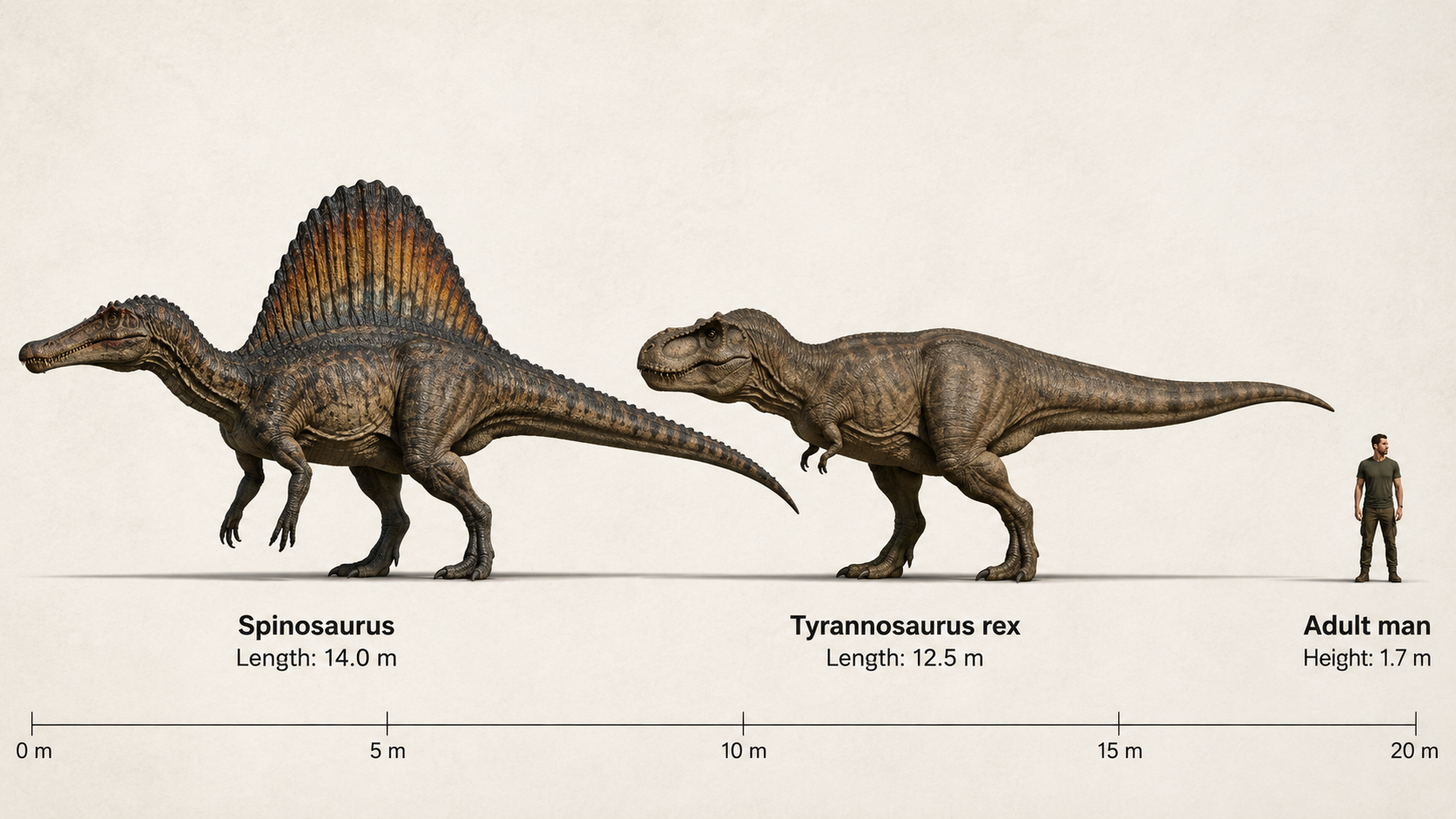
A very large T. rex is about 7.4 human heights long and more than 120 times heavier than the 70 kg ScaleCheck reference person.

T. rex12.5 m8.4 t
VS
Human1.7 m70 kg
Tyrannosaurus rex standing beside an adult human for scale
0 mRepresentative body length12.5 m
T. rex12.5 m
Human1.7 m

All bars share one linear metre scale. Human height and animal body length use different orientations, noted on each detail page.

Interactive true-scale view

T. rex and Human on one ground plane

T. rex is 10.8 m longer than the 1.7 m reference height. A 1.7 m human is included as a constant visual reference when it is not already one of the subjects.

T. rex12.5 mDetailed 3D model
Human1.7 mDetailed 3D model

Quick answer

The measurable difference

A very large T. rex is about 7.4 human heights long and more than 120 times heavier than the 70 kg ScaleCheck reference person.

Why this matchup matters

Different bodies, not just different numbers

Museum skeletons can hide scale because visitors stand below a mounted frame. Putting both subjects on the same floor restores the animal's actual body volume.

Human scale

How the gap feels

The dinosaur's hips sit around 4 m high. A person would look toward the lower torso, while the skull could be almost as long as the person is tall.

Evidence boundary

What the comparison cannot prove

This compares body length with standing human height, two different orientations. The visual scene is more informative than treating the 7.4 ratio as a height claim.

Side-by-side data

Actual display values

SubjectLengthHeight / depthMassEvidence context
T. rexabout 12.5 m longabout 4 m at the hipsabout 8.4 tonnes for a very large adultT. rex estimates vary by specimen. ScaleCheck uses 12.5 m and 8.4 tonnes to represent a very large adult rather than treating every individual as the same size.
Human1.7 m reference height1.7 m standing70 kg reference massUnlike a fossil reconstruction, the uncertainty here is a design choice rather than missing evidence. The values are deliberately rounded so comparisons stay consistent from page to page.

Evidence

Sources and measurement notes

  1. Natural History Museum - Tyrannosaurus facts and size
  2. ScaleCheck - About the atlas and its measurement approach