SIZE NOTE · Colossal Machines · TOP 10
What Is the World's Largest Airplane? An-225 vs. A380
The world's largest airplane depends on the measure. Compare the An-225 by weight, A380 by passenger capacity, and Roc by wingspan.
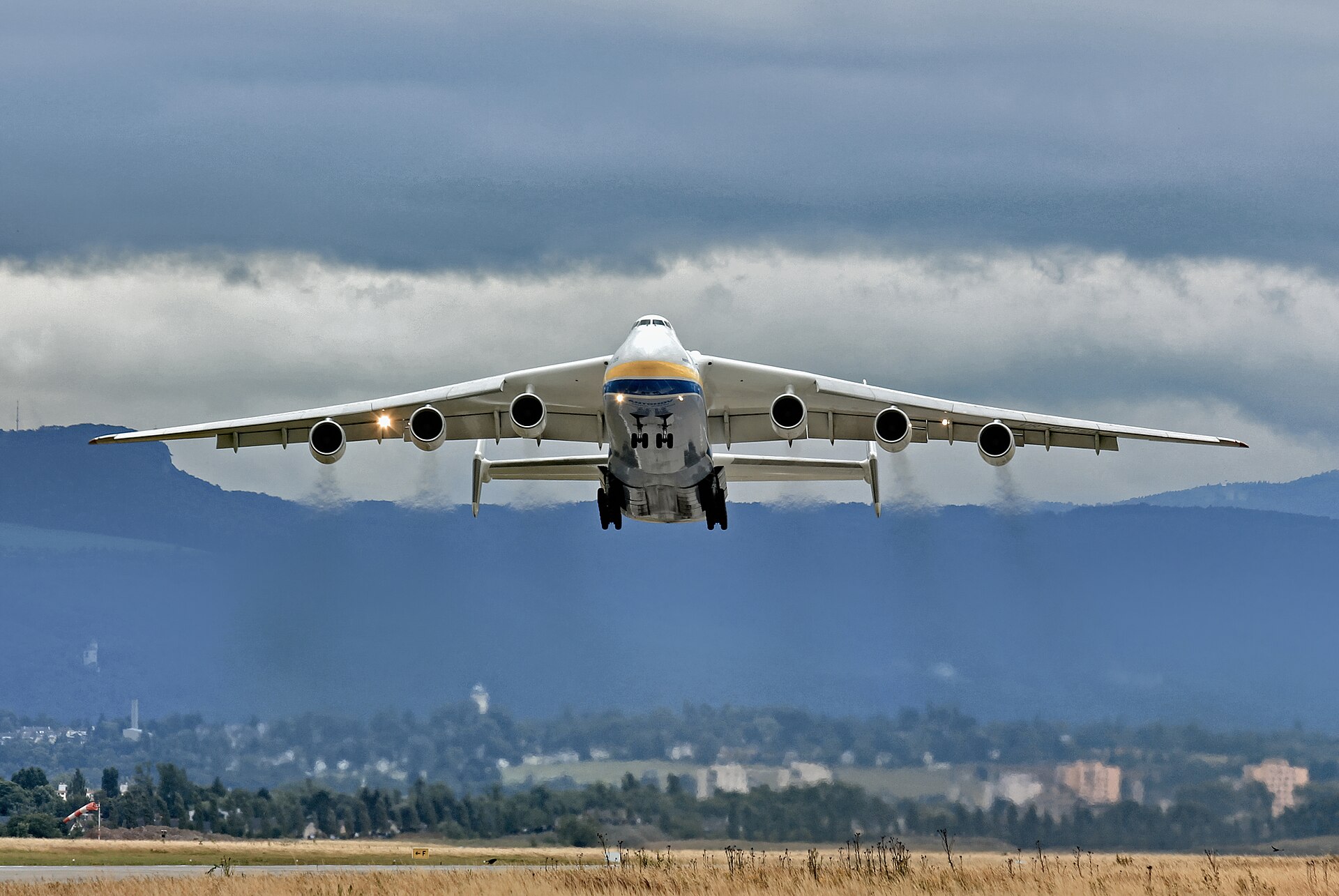
The first time you see an Airbus A380 from an airport observation deck, it takes a moment to register as an airplane. Moving across the runway, it looks more like a small building. Its tail rises toward the terminal roofline, while its wings stretch far across your field of view.
Yet another airplane was longer and heavier than the A380. It was the Antonov An-225 Mriya, whose Ukrainian name means “dream.”
So which was the world's largest airplane: the An-225 or the A380?
The short answer is that it depends on what you mean by “largest.”
The answer at a glance
- Heaviest airplane ever built: Antonov An-225 Mriya
- Largest passenger airplane: Airbus A380
- Fixed-wing airplane with the widest wingspan: Stratolaunch Roc
The An-225 was a heavy transport with a maximum takeoff weight of 640 tonnes and a maximum payload of 250 tonnes. The A380 is the largest passenger airplane ever built, with two full-length passenger decks. Roc was designed to carry test vehicles between its twin fuselages and release them in flight. Its wingspan is 385 feet (about 117.3 m).
That is why a precise answer to “What is the world's largest airplane?” needs one more detail: are we comparing weight, passenger capacity, or wingspan?
| Aircraft | Length | Wingspan | Height | Maximum takeoff weight | Record |
|---|---|---|---|---|---|
| Antonov An-225 | 84 m | 88.4 m | 18.2 m | 640 t | Heaviest airplane ever built |
| Airbus A380 | 72.7 m | 79.8 m | 24.1 m | 575 t | Largest passenger airplane ever built |
| Stratolaunch Roc | — | About 117.3 m | — | About 590 t | Widest wingspan of any fixed-wing airplane |
How big was the An-225?
The An-225 measured 84 m (276 ft) from nose to tail. If one floor of a building is roughly three meters tall, the airplane was about as long as a 28-story building laid on its side.
Its wingspan was 88.4 m (290 ft). Across a soccer field about 68 meters wide, the wingtips would extend more than ten meters beyond each sideline. Its 640-tonne maximum takeoff weight was 65 tonnes greater than that of an A380.
Numbers alone, however, do not explain why the An-225 was so remarkable. It was never intended to be an ordinary cargo airplane.
The Soviet aerospace program needed an aircraft capable of carrying the Buran space shuttle and components of the Energia rocket. Engineers lengthened the existing An-124 design and increased the engine count from four to six. They also split the vertical tail into two fins so that air could still reach the tail when an enormous load was mounted on top of the fuselage.
Its size was not a stunt. It was the consequence of a transport problem that almost no other machine could solve.
A 250-tonne cargo ship in the sky
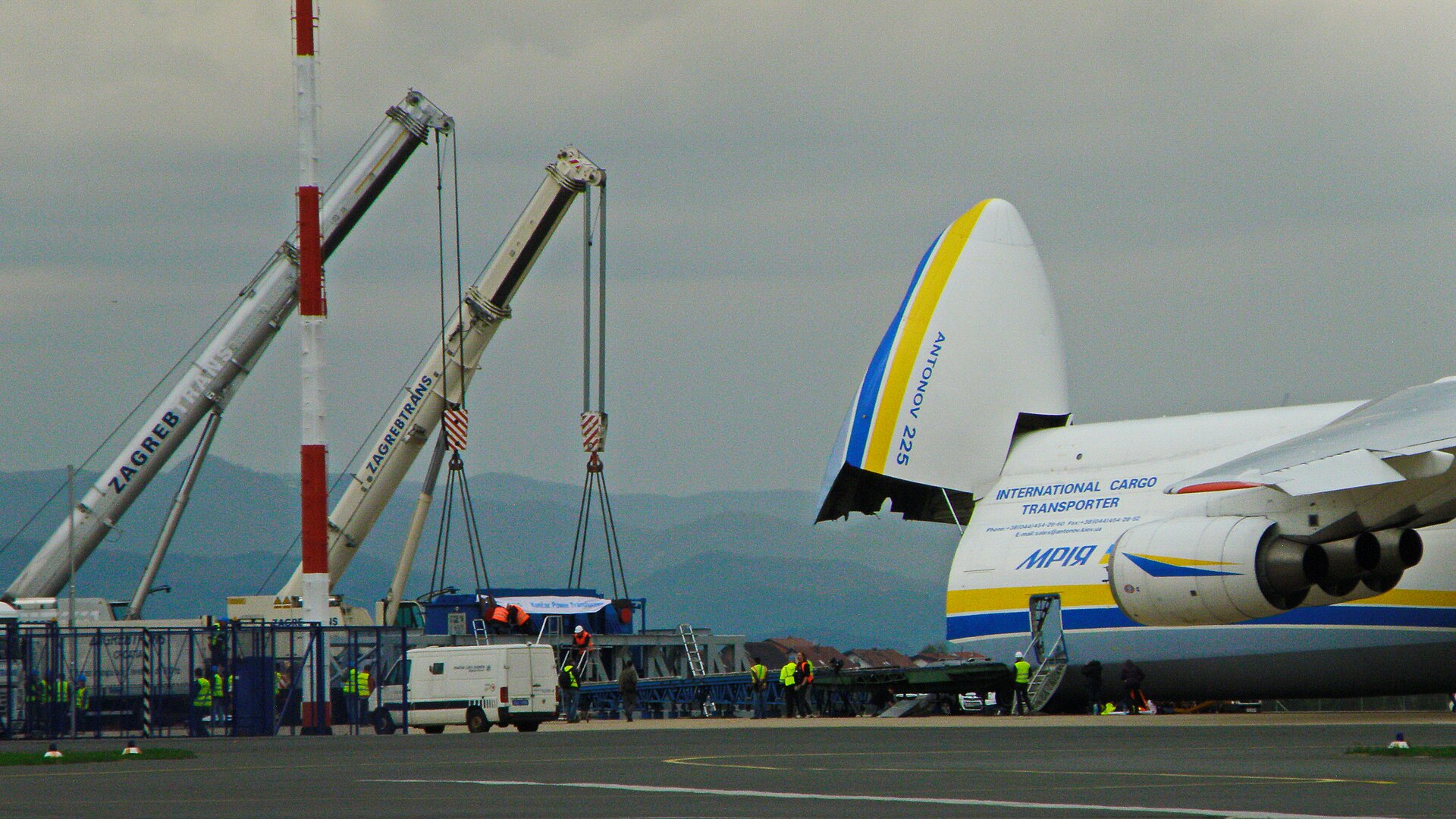 Antonov An-225 with its nose raised while oversized cargo is loaded
The An-225 could carry a maximum payload of 250 tonnes. Its cargo hold measured 43.3 m long, 6.4 m wide, and 4.4 m high. That made room for generators, transformers, rail vehicles, and industrial equipment far beyond the limits of conventional air freight.
The front of the fuselage swung upward to expose the cargo deck. The nose gear could also lower the aircraft into a kneeling position, reducing the angle of the loading ramp. Rather than waiting for a crane large enough to serve it, the airplane became part of the loading system itself.
After its first flight in 1988, the An-225 spent years carrying oversized loads that ordinary freighters could not accommodate.
That is what made every takeoff feel slightly unreal. A machine weighing more than 600 tonnes at maximum load would gather speed, lift its nose, and leave the runway behind.
Why is the A380 the largest passenger airplane?
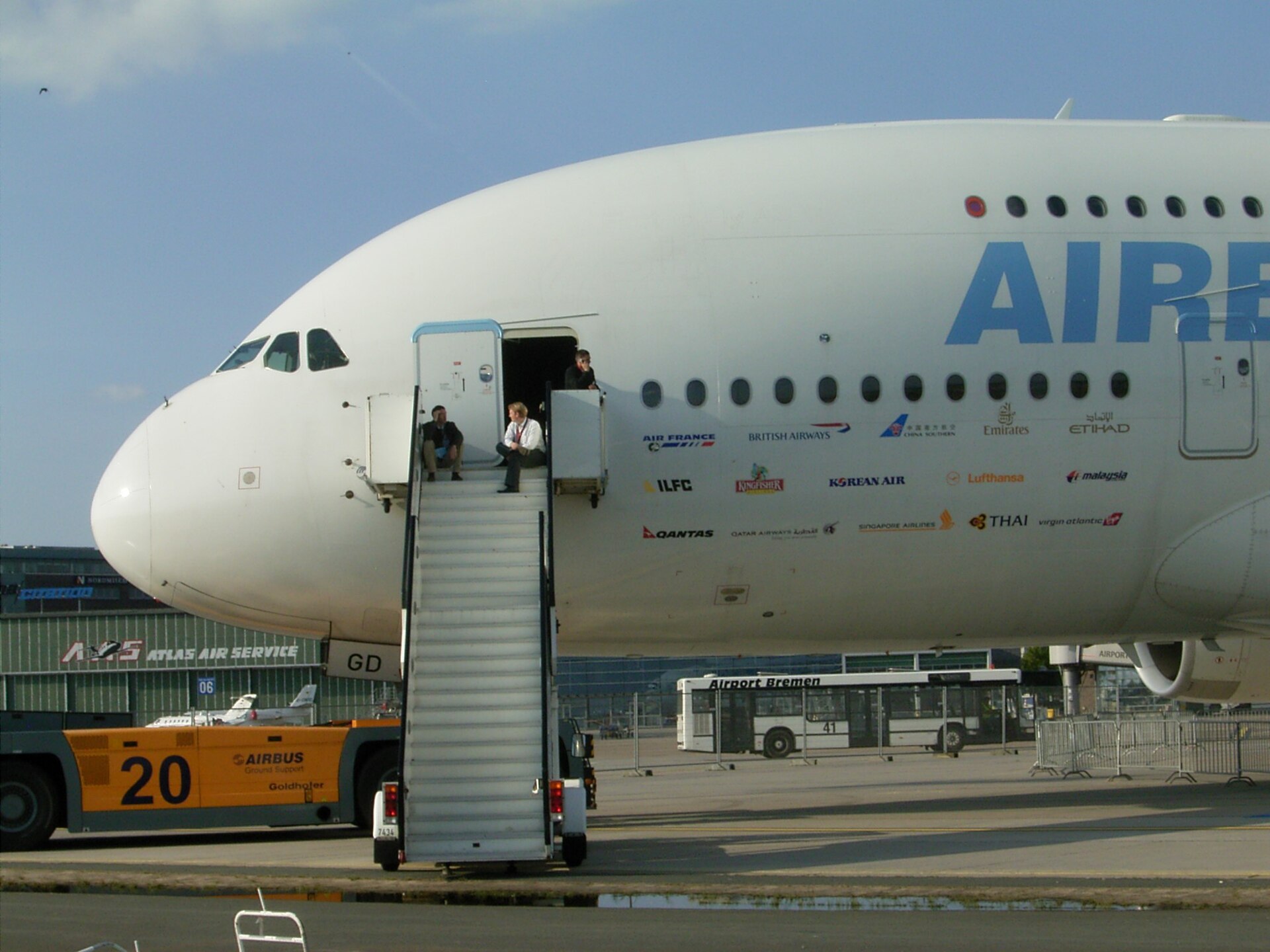 An Airbus A380 viewed from the front at an airport
The A380 is shorter and lighter than the An-225. It measures 72.7 m (238.5 ft) long, spans 79.8 m (261.8 ft), and has a maximum takeoff weight of 575 tonnes.
It is, however, 24.1 meters high—about 5.9 meters taller than the An-225. That is close to the height of an eight-story building. The difference comes from its deep, double-deck fuselage and the enormous vertical tail rising above it.
The A380's defining feature is its pair of full-length passenger decks. A Boeing 747 has an upper deck near the front, but the A380 carries its second deck through almost the entire fuselage.
In a typical four-class layout, an A380 seats about 545 passengers. Its certified maximum is 853 in a high-density configuration. The two passenger decks provide about 550 square meters of floor space, roughly the area of three singles tennis courts.
The A380 was not simply an attempt to build a large airplane. It was designed to move more passengers through limited airport slots on long-haul routes. Some airports had to prepare boarding bridges, baggage systems, gates, and taxiway clearances for its arrival.
An-225 vs. A380: side-by-side
Imagine parking both airplanes on the same runway.
The An-225 would extend 11.3 m farther from nose to tail. Its wings would reach 8.6 m wider, and its maximum takeoff weight would be 65 tonnes greater. In profile, it had the long, low stance of an airborne cargo ship.
The A380 would stand 5.9 m taller. Its fuselage was also much deeper, with two decks devoted to passengers. Seen from the front, it could look more like a building than the longer An-225.
| Comparison | Larger aircraft | Difference |
|---|---|---|
| Overall length | An-225 | 11.3 m |
| Wingspan | An-225 | 8.6 m |
| Height | A380 | 5.9 m |
| Maximum takeoff weight | An-225 | 65 t |
| Passenger capacity | A380 | Up to 853 people |
| Maximum payload | An-225 | 250 t |
The An-225 was a giant built around heavy cargo. The A380 was a giant built around people. Their dimensions were similar enough to invite comparison, but their interiors and purposes were fundamentally different.
Which airplane has the widest wings?
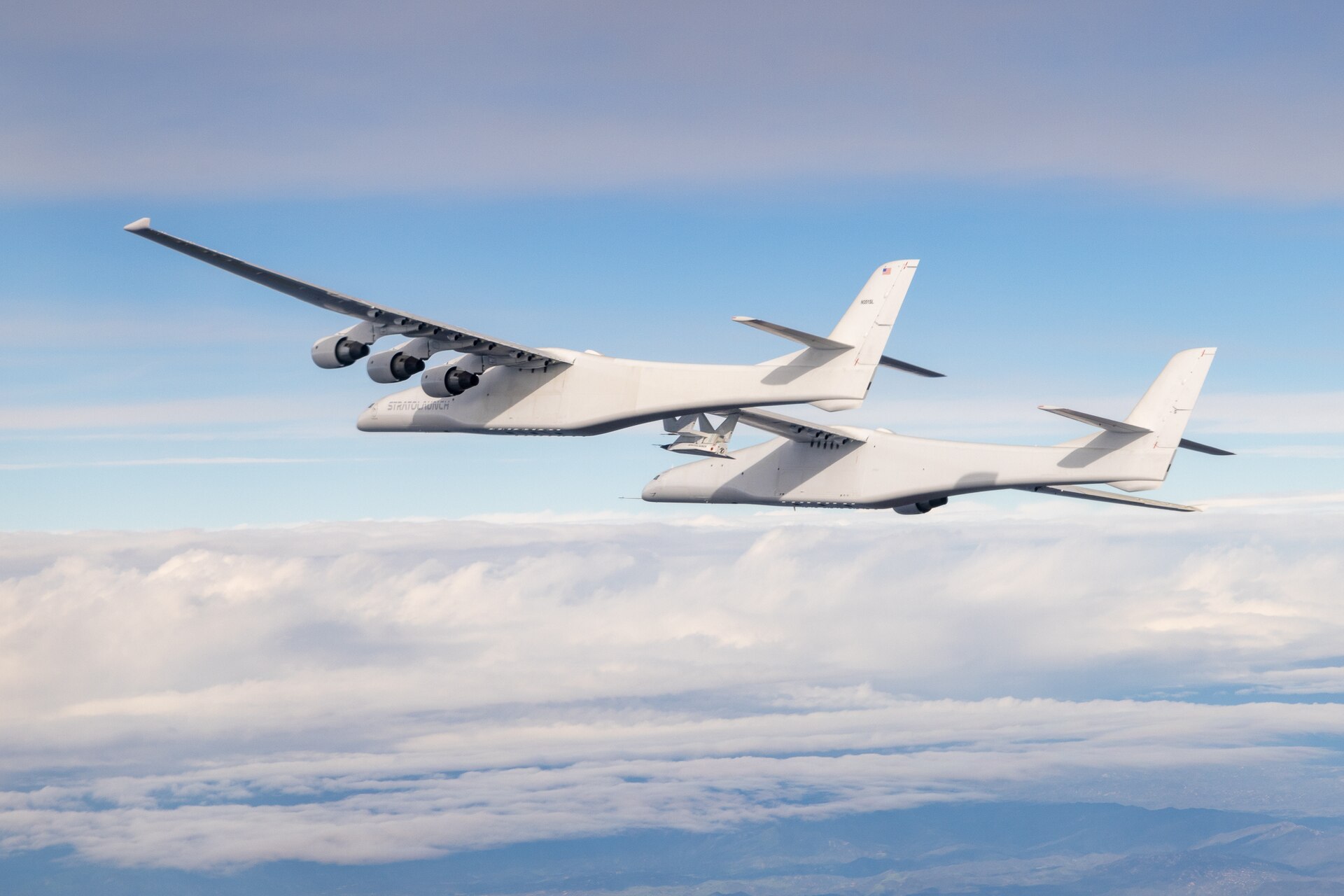 The twin-fuselage Stratolaunch Roc flying with its enormous wing spread
By wingspan, even the An-225 does not rank first.
That record belongs to the American Stratolaunch Roc. Its wing stretches 385 feet, or about 117.3 meters. That is roughly 29 meters wider than the An-225 and 37.5 meters wider than the A380.
Roc is not an airliner or a general-purpose cargo aircraft. It is an airborne launch platform. The aircraft carries a test vehicle between its two fuselages, climbs to altitude, and releases the vehicle in flight for missions such as hypersonic testing.
Its enormous wing is not there to make room for seats. It provides the structure and lift needed to carry a heavy test vehicle beneath the center of the aircraft. Roc is another reminder that the word “largest” means little until we decide what to measure.
Can the An-225 still fly?
Sadly, there is no An-225 flying today.
Only one An-225 was ever completed. It was destroyed at Antonov Airport in Hostomel during the fighting in February 2022. Ukraine and Antonov have expressed their intention to revive Mriya using surviving components and the unfinished second airframe, but neither a return-to-flight date nor a final construction plan can yet be treated as settled.
For that reason, the An-225 should now be described as the heaviest airplane ever built, rather than the heaviest airplane currently in service.
The original aircraft is gone, but its 640-tonne maximum takeoff weight and 250-tonne payload remain extraordinary milestones in aviation history.
Frequently asked questions
What is the world's largest airplane today?
It depends on the category. Stratolaunch Roc holds the fixed-wing wingspan record. The An-225 remains the heaviest airplane ever built, while the A380 is the largest passenger airplane.
Which was bigger, the An-225 or the A380?
The An-225 was longer, wider, and heavier at maximum takeoff weight. The A380 is taller and has the greater passenger capacity and cabin volume.
How many passengers can an A380 carry?
An A380 typically carries about 545 passengers in a four-class layout. Its certified maximum capacity is 853 passengers in a high-density configuration.
Why did the An-225 have six engines?
Moving a 640-tonne aircraft with as much as 250 tonnes of payload required immense thrust. When engineers enlarged the four-engine An-124 design, they increased the engine count to six.
Different kinds of giant
The An-225, A380, and Roc were all enormous, but they were never designed to compete with one another.
The An-225 existed to move cargo too large for other forms of transport. The A380 stacked two passenger decks to carry more people on long routes. Roc spreads a wing more than 100 meters across to release vehicles in flight.
In the end, the size of each airplane reflects the size of the problem its designers were trying to solve.
ScaleCheck's Largest Vehicles and Machines in Human History 3D exhibition will place the An-225 and A380 beside people, mining trucks, and space launch vehicles at a common scale. The proportions become far more startling when these machines are seen side by side instead of reduced to numbers on a page.
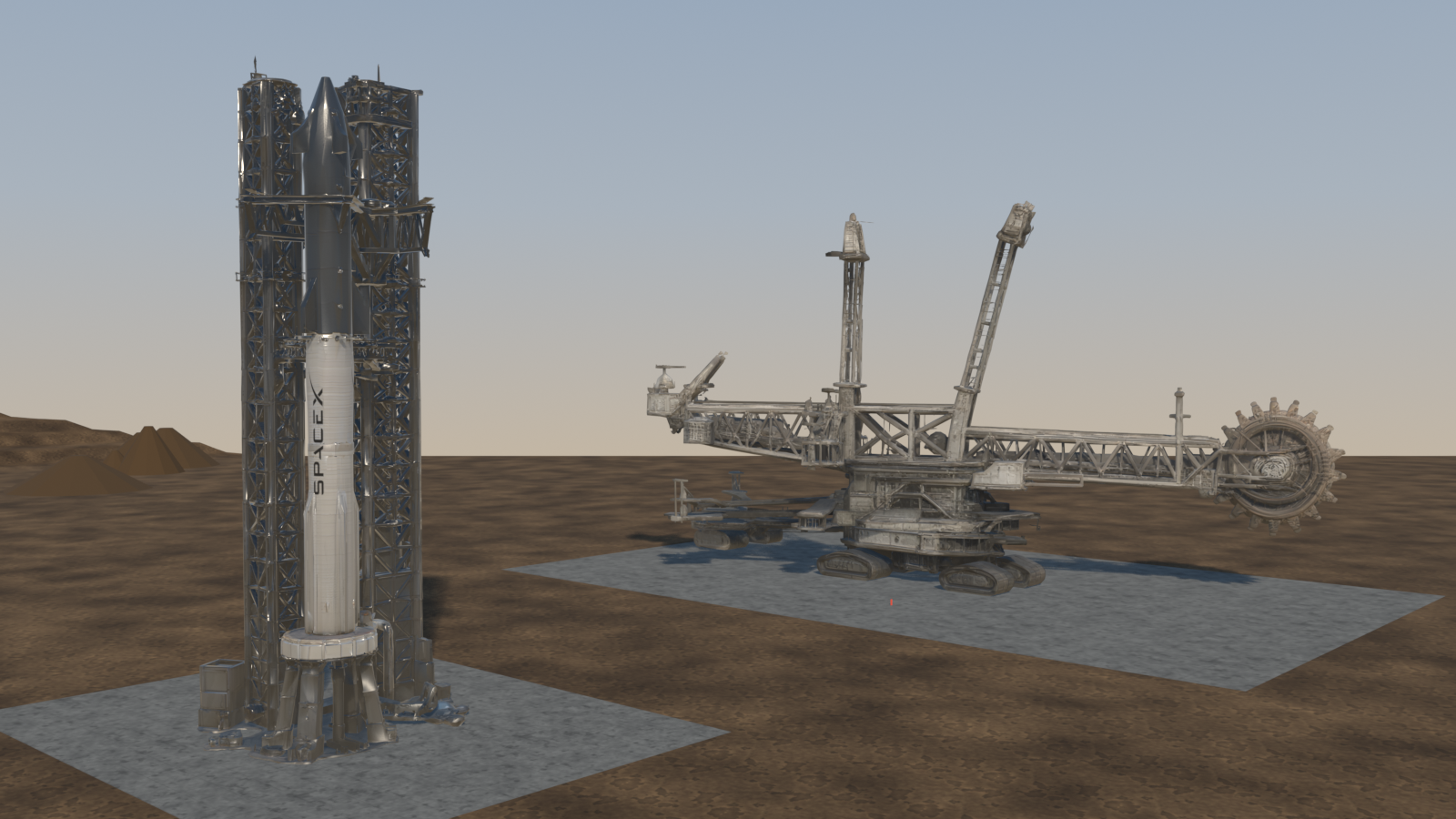
RELATED 3D EXHIBIT · 007
This exhibit is not available yet.
The Largest Vehicles and Machines in Human History is still being prepared. You can read this story, but the exhibit is not open yet.
Exhibit in preparationSOURCES
Sources
- Antonov — AN-225 Mriya history and specifications
- Antonov Airlines — AN-225 cargo aircraft specifications
- Airbus — A380 official characteristics
- Stratolaunch — Roc official specifications
- Office of the President of Ukraine — Destruction of the An-225 at Hostomel
- Hero image: An-225 takeoff by Eduard Marmet (CC BY-SA 2.0, Wikimedia Commons)
- Image: An-225 cargo loading by Miroslav.vajdic (CC BY-SA 3.0, Wikimedia Commons)
- Image: Airbus A380 by Pottz (Public domain, Wikimedia Commons)
- Image: Stratolaunch Roc by Eva Folsom (CC BY-SA 4.0, Wikimedia Commons)

How Tall is Burj Khalifa? Compared to Lotte World Tower
Compares the 828m Burj Khalifa and 554.5m Lotte World Tower using the same baseline and explains their height difference and measurement criteria.
Read story
The Largest Creature on Earth: The Blue Whale
Introducing the overwhelming size and characteristics of the blue whale, the largest creature on Earth, for an intuitive understanding at a glance.
Read story